← All solutions

AI VISIBILITY · WEBSITE AUDIT & IMPROVEMENTS

A good-looking website. But what can AI actually read?

We examine the content your website delivers, the information it makes accessible, and how clearly it describes your business. You get evidence, priorities and a practical plan to improve it.

For your existing website · Audit first · Improvements by agreement

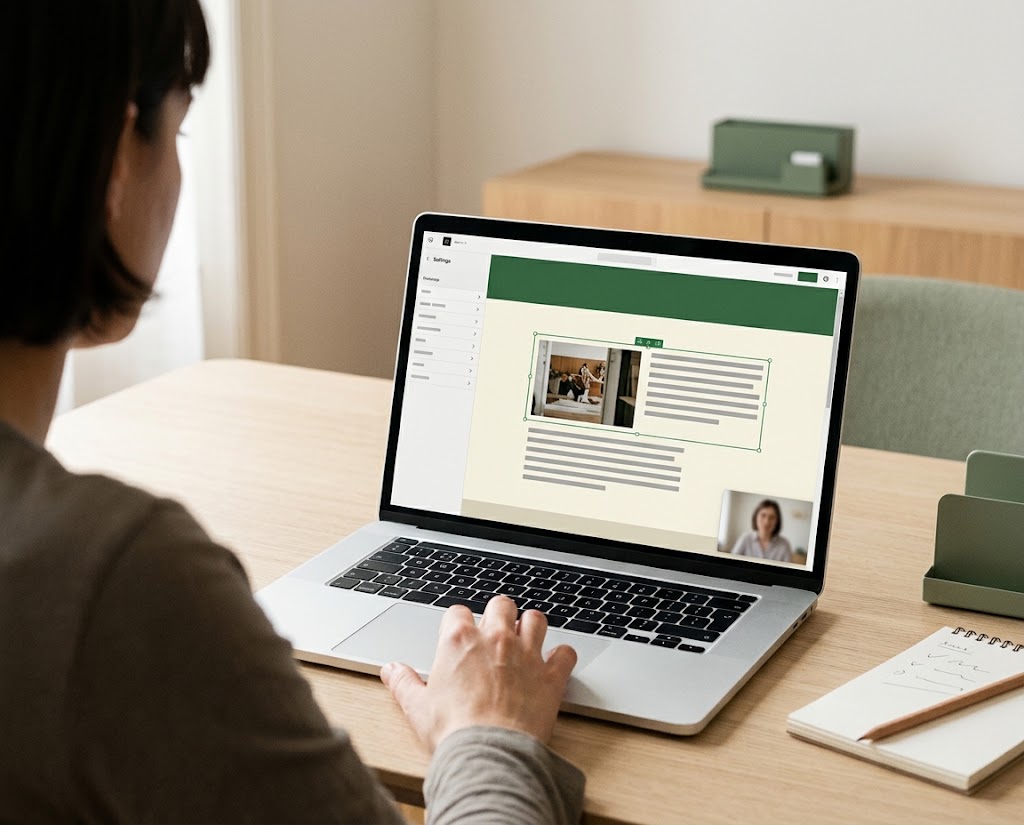
A person reviewing website content on a laptop during a video call.

01 / WHAT WE EXAMINE

Readable. Usable. Understandable.

A page can be technically readable and still say very little about the business behind it. We look at all three layers.

01

Can the content be accessed?

Find technical barriers before working on the wording.

See the checks
Content without JavaScript
Check the initial HTML for readable text and signs of an empty application shell.
Browser comparison
When browser rendering is available, compare the text returned directly with the text visible after rendering.
Crawler rules
Inspect robots.txt for broad blocking rules affecting named crawlers. Review findings against your intended access policy.
Different responses
Compare status and response size for browser-shaped and scanner requests. Differences are a reason to investigate.
Response time
Record time to first byte as a technical signal, rather than an AI ranking prediction.
02

Are the facts accessible?

Look for information hidden in images, embeds or hard-to-reach pages.

See the checks
Images and alternative text
Flag missing alternative text and filenames suggesting a menu, price list or opening hours for visual review.
Linked documents
Where linked PDFs are sampled, look for signs of a text layer. Suspected image-only documents need further review.
Embedded information
Identify third-party frames and external booking or review links. Assess which essential facts should also appear on your site.
Service URLs
Inspect internal paths, section anchors and sitemap entries to assess whether individual services have useful pages of their own.
Broken links
Request a sample of internal links and investigate errors, including broken language links.
03

Is your business clearly described?

Make the who, what and where explicit in your content.

See the checks
Business identity
Look for organisation or business structured data (JSON-LD), along with contact, address and registration information.
Titles and headings
Check whether the page names a service and has a useful heading structure, rather than relying on a slogan.
Offer and service area
Look for price or scope signals and the places or regions you serve. Interpret these in the context of your business.
Language and summaries
Inspect the page language, language-alternate declarations and meta description.
Freshness signals
Look for dates and update information. A detected date does not prove that the underlying information is current.

A focused audit, with its scope made explicit.

The scan starts with a page URL and samples supporting information and links. We agree which pages belong in your audit. Browser comparisons and document checks depend on what is available. Missing measurements are called out, not treated as a clean bill of health.

02 / A LOOK INSIDE THE AUDIT

From a finding to a fix.

An issue is useful when you can see the evidence, understand the impact and know what to change.

ILLUSTRATIVE REPORT · FICTIONAL WEBSITE
Needs attention

“Welcome” doesn’t describe your service.

What we find

The page title is generic. It gives no service or location information.

<title>Welcome</title>

Why we review it

A reader has little context for what this page offers. We review the title together with the main heading and visible service text.

What we would improve

Use a specific title that matches the real business and the service described on the page.

<title>Pipe repairs in Essen | Example Plumbing</title>

How we check the change

Fetch the updated page and check that the title and main heading describe the actual offering.

Examples show the format of a finding, not results from a live customer scan. Your report includes the evidence collected for your agreed scope.

03 / WHAT YOU GET

Useful evidence. Clear next steps.

01

An evidence-based report

Findings organised by layer, with observed values and supporting details. See what passed, what needs attention and what was not measured.

02

A prioritised discussion

We review the findings with you, separate technical issues from content decisions, and agree which improvements matter for your website.

03

An agreed improvement plan

Fixes are scoped around your existing platform. After implementation, we repeat the relevant checks and document what changed.

04 / YOUR NEXT STEP

Start with your website URL.

  1. 01

    Share your website

    Tell us what you offer, where you work and which pages matter most.

  2. 02

    Agree on the audit

    We clarify the scope and prepare a personalised audit offer. Your offer link handles payment and booking the audit discussion.

  3. 03

    Review, improve, verify

    Discuss the findings, agree on any implementation work and verify the changes once completed.

LET’S FIND YOUR STARTING POINT

What could work better for you?

Tell us where things get stuck. We’ll help you identify a practical next step.

Discuss a website check

A few useful answers.

Does this check whether ChatGPT recommends us?

The scanner checks your website’s technical accessibility and content signals. It does not query AI assistants or measure how often they recommend you. A review of answers to specific customer questions can be scoped separately.

Will this guarantee visibility in AI answers?

No. We can measure and improve specific aspects of your website. Whether an AI assistant finds, cites or recommends the business depends on factors beyond these checks.

Do you scan every page and document?

Not automatically. The scanner starts with a page and samples internal links and, where applicable, documents. We agree which URLs and checks are included in your audit.

Should we allow every AI crawler?

We review access rules against your intended use. A blocking rule may be deliberate. We do not recommend opening access to every crawler simply to raise a score.

Are improvements included in the audit?

The personalised offer defines the audit scope. Implementation work is agreed separately unless the offer explicitly includes it. You can start with the audit of your existing website.

What do you need to begin?

Your public website URL, a short description of your business and the pages or services you want to focus on. Website editing access is only needed if we agree to implement changes.